
The most common concern among commerce students when they hear about AI and automation in finance is this: will there still be jobs for us?
The answer, backed by current hiring data, is a clear yes. But the shape of those jobs is changing. The skills they require are shifting. And the students who understand this shift before they graduate are the ones who will find themselves on the right side of it.
What the Data Actually Shows
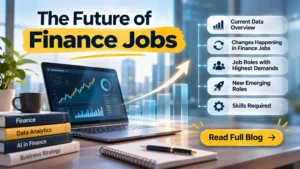
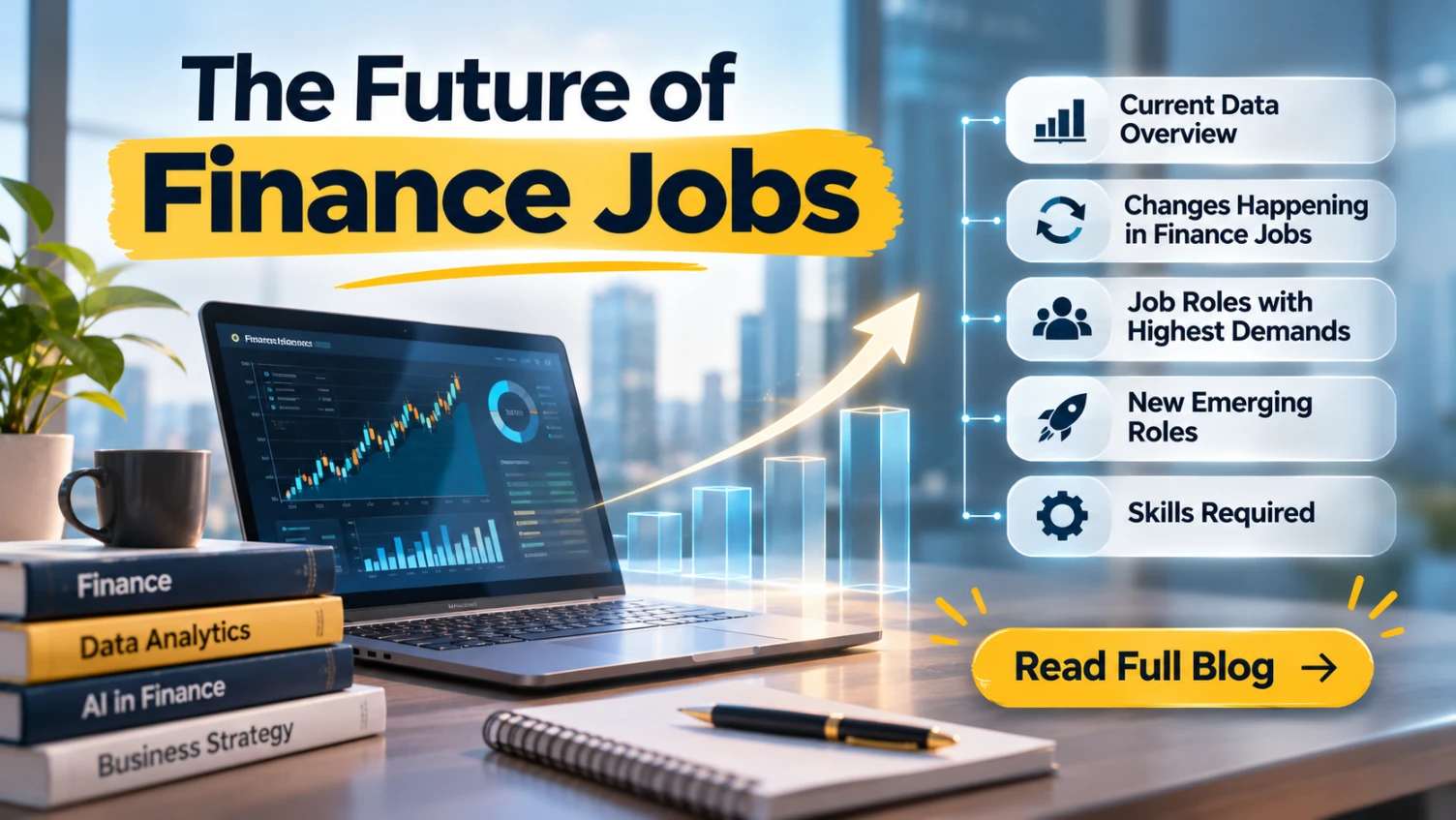
Finance is not shrinking as a career field. It is growing, but it is growing in specific directions.
According to Robert Half's Finance and Accounting Hiring Trends Report for H2 2026, 74% of finance and accounting leaders plan to increase permanent headcount in the second half of 2026. At the same time, the same Robert Half report notes a persistent shortage of accounting talent, keeping competition high for roles tied to close execution, reporting accuracy, compliance, and internal controls.
Simultaneously, Deloitte's analysis on the future of finance identifies a global talent crisis in accounting and finance as one of the defining realities of the current decade. There are not enough qualified finance professionals to meet demand.
For a student entering the field now, this is actually a structural opportunity, provided they enter with the skills the market is hiring for.
What Is Changing About Finance Jobs
The jobs that are shrinking in finance are the ones built around manual, repetitive data processing: basic data entry, manual reconciliations, routine journal posting, and report compilation. These tasks are being absorbed by automation and AI tools faster than most people anticipated.
As Withvayu's analysis on AI in finance roles puts it directly: "Transactional work will increasingly be handled by automation, while finance professionals focus on oversight, compliance, and strategic guidance."
The jobs that are growing are those requiring financial judgment, data interpretation, business decision support, and regulatory navigation. These are skills that automation surfaces the data for but cannot supply on its own.
Understanding what corporate accounting actually involves at a foundational level is the starting point, but the future finance professional builds significantly beyond it.
The Roles That Are In Highest Demand Right Now
Robert Half's hiring data for 2026 identifies specific roles where demand is outpacing supply. These are the job titles that finance and accounting teams are actively competing to fill:
Financial Analyst and Senior Financial Analyst: Companies want professionals who can translate financial data into practical, actionable recommendations. This is not basic bookkeeping. It is the ability to read performance numbers, identify what they mean for the business, and communicate that clearly to decision-makers.
FP&A Specialist: Financial Planning and Analysis roles are expanding as organisations want sharper forecasting, better visibility into costs, and stronger scenario modelling. This is one of the fastest-growing finance functions in Indian corporate environments right now.
Director of Finance: Senior finance leadership roles remain a priority hire as companies need professionals who can connect strategy to execution through planning, forecasting, and systems modernisation.
AP/AR Specialist: Even in areas where automation is present, companies need professionals who can manage cash flow visibility, keep billing and collections on track, and maintain accuracy as transaction volumes grow.
The common thread across all of these: they require human judgment, communication, and strategic thinking alongside technical knowledge. They are not disappearing. They are becoming more demanding.
The Roles That Are Emerging
Beyond the established roles expanding in demand, entirely new job titles are appearing in finance hiring across India's banking, FinTech, and corporate finance sectors.
FinTech Analyst: Works at the intersection of financial services and technology, evaluating digital payment systems, lending platforms, and financial product infrastructure. A role that barely existed five years ago.
Risk Analyst: As digital finance expands, so does exposure to fraud, regulatory risk, and data security risk. Risk Analysts evaluate these exposures and build frameworks to manage them. Demand is growing significantly across banks, NBFCs, and FinTech firms.
ESG Analyst: Sustainability reporting is becoming a compliance function rather than a voluntary initiative. ESG Analysts build, manage, and report on environmental, social, and governance metrics for organisations subject to increasing disclosure requirements.
Business Analyst (Finance): Sits between finance and operations, using financial data to evaluate business performance, identify inefficiencies, and support strategic decisions. A high-growth role across industries from banking to FMCG to consulting.
Our blog on career opportunities after a PGDM in Finance and FinTech covers several of these emerging roles in detail.
The Skills Future Finance Jobs Reward
Across both the established roles expanding in demand and the new roles emerging, a consistent skill set is appearing as the baseline for employable finance professionals.
Withvayu's assessment of what AI is doing to finance summarises it clearly: "The winning combination will be financial judgment paired with technological fluency."
Breaking that down into practical skill areas:
- Data literacy: The ability to work with financial data at scale, using tools like Power BI, advanced Excel, and MIS dashboards to surface and present insights
- AI tool proficiency: Comfort with AI-assisted financial tools, knowing how to use them efficiently and how to review their outputs critically
- Compliance and regulatory understanding: As regulatory frameworks around digital finance, GST, and ESG reporting tighten, professionals who understand compliance are increasingly valuable
- Business communication: The ability to explain financial analysis to non-finance stakeholders, present forecasts clearly, and support business decisions with structured financial thinking
For students wondering how to build the data side of this skill set, our blog on what MIS reporting is and why commerce graduates need it is worth reading as a starting point.
How to Position Yourself for These Jobs
The gap between what most commerce programs teach and what the future finance job market requires is not small. Most programs still build their curriculum around the finance professional of 2015. The finance professional of 2027 needs a different preparation.
Robert Half's 2026 data notes that 95% of finance and accounting teams expect to be involved in a major digital transformation initiative within the next two years. Being ready to work inside that transformation, rather than needing to catch up to it, is the single biggest career advantage a finance graduate can have right now.
This means the program you choose matters as much as the fact that you chose to study finance. A program that integrates real tools, applied accounting, data analytics, and professional skill development into the curriculum itself produces graduates who are ready for the future finance job market. One that covers theory without application does not.
At Nilaya Education, Pune, this gap is what our finance and management programs are specifically designed to address. Since 2008, we have placed over 10,000 students at more than 1,000 companies across banking, corporate finance, FinTech, and consulting, backed by a 100% Placement Guarantee on Stamp Paper.
Our Finance Manager program and Smart MBA + PGDM in Finance and FinTech are both designed with this gap in mind. Both build the applied, tools-based, analytically oriented skill set that the roles above require, rather than relying on a graduate to develop it independently after they enter the workforce.
Conclusion
Finance jobs are not disappearing. They are becoming more specialised, more analytical, and more valuable to the businesses that rely on them. The professionals who will thrive are those who combine sound financial knowledge with the tools, judgment, and communication skills to operate effectively in an AI-integrated, data-driven workplace.
That combination is buildable. It requires the right program, the right tools training, and the right professional development support. But it begins with understanding where the jobs are going, which is exactly what this question is about.
To understand which program at Nilaya best positions you for the finance career of 2027 and beyond, visit nilayaeducation.org or call +91 97 3000 5000.