
Commerce education has traditionally focused on theoretical subjects such as accounting, economics, and business principles. While these areas remain important, the expectations from commerce graduates have evolved significantly. Today’s industries expect students to possess not only academic knowledge but also practical understanding of how businesses operate.
Companies increasingly look for candidates who can communicate effectively, manage financial processes, coordinate with teams, and understand corporate workflows. This shift has created a demand for education models that combine academic learning with professional skill development.
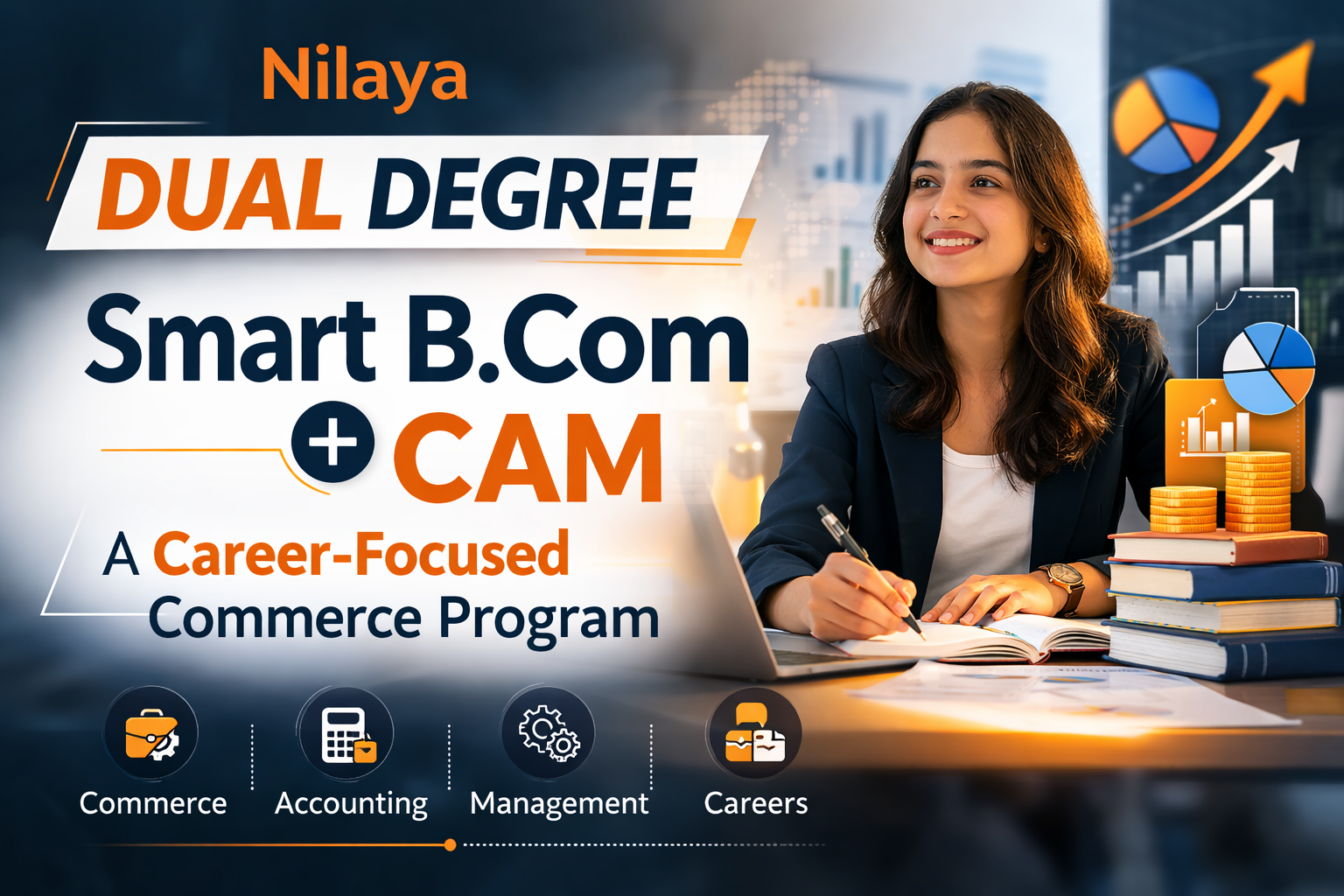
Programs like the Dual Degree Smart B.Com + CAM have emerged to address this changing landscape. By integrating commerce education with practical corporate exposure, the program aims to prepare students for real-world business environments from the early stages of their academic journey.
What Is Nilaya Dual Degree Smart B.Com + CAM?
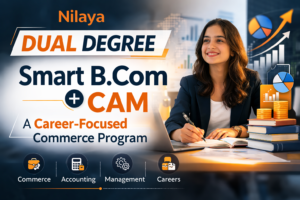
The Dual Degree Smart B.Com + CAM is designed to provide students with a structured blend of traditional commerce education and professional skill development. While the B.Com component focuses on foundational subjects such as accounting, business management, and finance, the Corporate Account Management (CAM) component introduces students to practical business operations.
This integrated structure helps students develop a broader understanding of how financial systems, corporate communication, and operational processes work together within organizations. Instead of studying commerce purely from a theoretical perspective, students gain insights into how business functions are executed in real corporate settings.
The goal of the Dual Degree Smart B.Com + CAM is to reduce the gap between academic education and professional expectations. Students graduate with both conceptual clarity and practical awareness, making them better prepared for entry-level roles in business and finance sectors.
Why Commerce Students Need Career-Focused Education
The nature of commerce careers has changed over the past decade. Employers today value practical skills, adaptability, and workplace readiness. Graduates who understand financial processes, business communication, and corporate workflows often have an advantage during the early stages of their careers.
Traditional degree programs sometimes focus heavily on theoretical knowledge. While this builds academic foundations, students may still need additional exposure to workplace practices before they feel confident in professional environments.
A career-focused commerce program helps bridge this gap by introducing applied learning alongside academic subjects. By combining business fundamentals with professional skill development, students gain the ability to understand how theoretical concepts translate into real-world scenarios.
Programs such as the Dual Degree Smart B.Com + CAM aim to build this balance by exposing students to both commerce education and practical corporate skills. This integrated approach helps students understand how finance, communication, and business operations interact within organizations.
What Students Learn in Nilaya Smart B.Com + CAM
The Dual Degree Smart B.Com + CAM focuses on developing both academic knowledge and professional competencies. Instead of limiting learning to classroom theory, the program encourages students to understand the practical aspects of business and finance.
Key learning areas include:
- Accounting and Financial Fundamentals
Understanding core accounting principles, financial records, and basic financial management concepts. - Corporate Account Management Skills
Learning how organizations manage accounts, client relationships, and financial coordination within corporate environments. - Business Communication and Professional Skills
Developing communication abilities that help students interact confidently in workplace settings. - Financial Analysis and Reporting
Understanding how financial information is interpreted and used for decision-making in business operations. - Understanding Corporate Operations
Gaining exposure to how departments collaborate, manage workflows, and support overall business functions.
Through this structure, the Dual Degree Smart B.Com + CAM helps students develop a combination of academic knowledge and applied professional skills that are useful in multiple business environments.
Career Opportunities After Smart B.Com + CAM
A commerce degree with additional professional exposure can open a variety of career pathways. Students who complete programs such as the Dual Degree Smart B.Com + CAM gain a foundation that allows them to explore entry-level roles across finance, business operations, and corporate administration.
Common career opportunities may include:
- Accounts Executive
- Corporate Account Management roles
- Financial Operations Assistant
- Business Coordination roles
- Entry-level positions in finance and corporate departments
These roles often serve as the starting point for long-term professional growth in the finance and business sectors. Graduates can further specialize in areas such as accounting, financial management, or corporate operations as they gain experience.
Because the Dual Degree Smart B.Com + CAM combines academic commerce education with corporate skill development, students often develop greater confidence when entering professional environments.
Conclusion: Building a Strong Commerce Career
Choosing the right academic program can play an important role in shaping a student’s career path. In today’s evolving business landscape, students benefit from education that combines academic learning with practical exposure.
Programs like the Dual Degree Smart B.Com + CAM represent a shift toward more applied and career-focused commerce education. By integrating traditional B.Com subjects with corporate account management skills, the program helps students develop both conceptual understanding and professional readiness.
For commerce students looking to build a strong foundation for future business careers, structured programs that emphasize practical learning can provide a meaningful advantage. With the right combination of knowledge, skills, and professional awareness, graduates can enter the corporate world with greater confidence and clarity about their career direction.